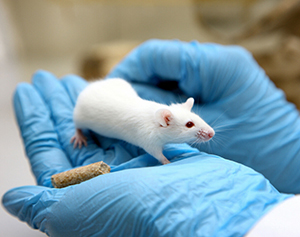
112,000 Animals used in Irish Lab Experiments last year

112,000 Animals used in Irish Lab Experiments last year

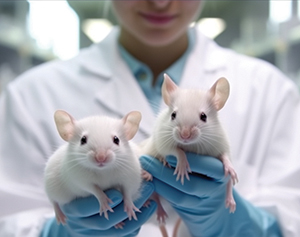
MORE THAN 112,000 animals were used for research and testing purposes in Irish laboratories during 2024, representing a 5% increase on the previous year, new figures have revealed.

Mice were used in almost 86% of the experiments but other species included dogs, guinea pigs, rabbits, horses, goats, and ferrets. Around 1,400 animals were used in more than one experiment. Just over 19,000 of the experiments involved “severe” pain and suffering for the animals, as categorised by the Health Products Regulatory Authority (HPRA), which is responsible for protecting animals used for scientific purposes.

The increase in the use of animals in Irish labs for a second consecutive year has been criticised by the Irish Anti-Vivisection Society (IAVS), which said the rise in “severe” experiments was particularly worrying. “The number of experiments involving the infliction of ‘severe’ pain and suffering remains unacceptably high, with 19,054 enduring such extreme cruelty, representing an increase of over 44%, or almost 6,000 animals, in just two years,” said a spokesman.
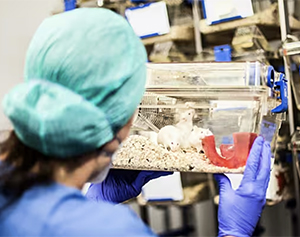
Dogs and Horses used in Irish Lab Experiments last year

Dogs and Horses used in Irish Lab Experiments last year

More than 112,000 animals were used for research and testing purposes in Irish laboratories during 2024, representing a five per cent increase on the previous year, new figures have revealed.

Mice were used in almost 86 per cent of the experiments but other species included dogs, guinea pigs, rabbits, horses, goats, and ferrets. Around 1,400 animals were used in more than one experiment.

Just over 19,000 of the experiments involved “severe” pain and suffering for the animals, as categorised by the Health Products Regulatory Authority (HPRA), which is responsible for protecting animals used for scientific purposes.

Modernisation of EU On-Farm Animal Welfare

Modernisation of EU On-Farm Animal Welfare

We are strongly encouraging our members to take just a few minutes to complete the public consultation launched by the European Commission on updating EU legislation on on-farm animal welfare – including phasing out the use of cages for farm animals.

Please help!
Fill in the survey, and make your voice heard!

Stop Experiments on Monkeys in Germany

Stop Experiments on Monkeys in Germany

Every year, more than 1,600 monkeys are used in experiments in Germany, many of them in particularly severe procedures such as toxicity tests, organ transplants, or invasive brain surgeries. During years in captivity, the monkeys are poisoned, suffer drill holes in their skulls, and are being restrained and kept thirsty.

Doctors Against Animal Experiments, together with PETA Germany, has submitted a petition to the Bundestag, the German parliament, calling for an end to experiments on non-human primates in Germany.

Please help!
Sign the petition now

Netherlands Ends Funding for Monkey Experiments

Netherlands Ends Funding for Monkey Experiments

House of Representatives will no longer provide money for monkey testing!

Today, the House of Representatives took an important step towards a future without monkey testing. An amendment by Member of Parliament Ines Kostić (Party for the Animals), which advocates a gradual shift of research budgets for the BPRC to animal-free methods, was adopted.1

The BPRC currently receives 12.5 million euros per year from the Ministry of Education, Culture and Science (OCW). This amendment will not change this amount, but the BPRC will have to spend an increasing part of its budget on alternatives to animal testing over the next five years.

The amendment was co-signed by Members of Parliament from various political parties: Laurens Dassen (Volt), Laura Bromet (GroenLink), Joost Eerdmans (JA21), Doğukan Ergin (DENK), Sandra Beckerman (SP) and Dion Graus (PVV).

Accelerating Humane and Human-Relevant Science

Accelerating Humane and Human-Relevant Science

The ethical and scientific crossroads

Millions of animals suffer in laboratories across Europe and globally each year, including dogs, cats, monkeys, and rodents (1). This practice is undergoing a significant re-evaluation due to ethical concerns and scientific limitations. Animal experimentation, long a staple of biomedical research and regulatory testing, is increasingly challenged by evidence of its poor applicability to human health.

A paradigm shift is underway, driven by scientific innovation, ethical pressure, and policy reforms, moving towards animal-free research methodologies (2). These Non-Animal Methodologies (NAMs) aim not just to reduce animal suffering but to provide scientifically superior tools. The language is evolving from "alternatives" to "replacements" and "superior methods," reflecting growing confidence in human-based approaches (3). Advanced technologies like artificial intelligence (AI), organoids, and organs-on-a-chip, coupled with public demand for ethical science (e.g., European Citizens' Initiatives (4)), are accelerating this transition. This article explores the failings of animal experimentation, the potential of NAMs, global policy shifts in the EU and US, and the next steps towards animal-free science.

World Day for Laboratory Animals 24 April 2025

World Day for Laboratory Animals 24 April 2025

IAVS is proud to mark World Day for Laboratory Animals 2025 with a €5000 donation to Replacing Animal Research

Their incredible work funds innovative, human-based research methods that replace the need for animal testing — advancing science and compassion side by side. From supporting the pioneering FRAME Laboratory to empowering young researchers through studentships and grants, every project moves us closer to a humane future.

 2023 Statistics for Animal Experiments in Ireland 

 2023 Statistics for Animal Experiments in Ireland 

The Irish Anti-Vivisection Society (IAVS) is deeply appalled at the latest annual increase in animal suffering in Irish labs. Statistics for the year 2023 reveal 107,873 animal experiments, an increase of 14,934 or 16% compared with 2022. 

The figures for the pain and suffering caused by these experiments make for even more worrying reading. There has been a disturbing rise in the number of animals forced to endure ‘severe’ suffering, going up from 13,212 to 19,816, an increase of 6,604 or almost 50%.

General Elections November 29th

General Elections November 29th

PLEASE BE A VOICE FOR ANIMALS

Ahead of the general election on November 29th, your local candidates will be out and about in your area trying to get your vote. Please consider taking the opportunity to ask them about their position on animal welfare.

Rabbit Pyrogen Test to be deleted from Pharmacopoeia

Rabbit Pyrogen Test to be deleted from Pharmacopoeia

Pyrogen detection is essential for ensuring the safety of parenteral medicines. For decades, the rabbit pyrogen test (RPT) has been the traditional method.
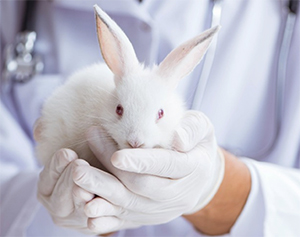
The RPT involves measuring the rise in body temperature in rabbits following intravenous injection of the substance to be examined.

Despite multiple efforts to encourage medicine developers to move away from the RPT, the test is still widely used to detect pyrogenic substances, consuming a large number of rabbits worldwide.