

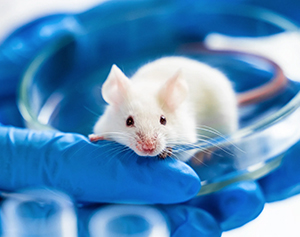
Thousands of mice continue to suffer severe poisoning to test cosmetic ‘botox’-type products
The Irish Anti-Vivisection Society (IAVS) is highly critical of the Government and Health Products Regulatory Authority (HPRA) for allowing painful animal tests to increase in Ireland for the second year in a row. Official figures released on the HPRA website on 16th December 2025 reveal a shocking increase in the number of animals used in Irish laboratories in 2024, up by 5,710 to 112,349 compared with 2023. Since 2022, the annual toll has risen by 19,410 animals.
The number of experiments involving the infliction of ‘severe’ pain and suffering remains unacceptably high, with 19,054 enduring such extreme cruelty, representing an increase of over 44%, or almost 6,000 animals, in just two years.
Once again, Ireland’s worsening record on laboratory animal cruelty has been driven by an increase in lethal poisoning tests for Botulinum toxin products, most of which are thought to be destined for cosmetic uses. These tests are counted under the category of ‘batch potency tests’, with previous government estimates indicating they comprise up to 75% of the total of 76,556, i.e. 57,417 animal poisonings.
Botulinum toxin is one of the most powerful biological poisons known to humanity. For each test, the mice are divided into 3 or 4 groups, each receiving different strengths of the toxin. Those in the highest-strength group start showing signs of poisoning within hours, with paralysis of the lower body, leading them to stagger or be unable to walk. After about a day, the paralysis starts to affect the respiratory muscles, making the mice gasp for air, start to literally go blue, and die of asphyxiation. The paralysis can also stop some of the animals reaching food and water, and this can be a cause of death before the toxin, further undermining the scientific validity of the test as well as exacerbating the animals’ suffering.
Brands of cosmetic Botulinum toxin available in Ireland include: Botox, Azzalure, Alluzience, Bocouture, Nuceiva and Letybo. All are tested on animals to some extent. The Government refuses to disclose which brands are used in specific animal testing projects. The IAVS believes that the HPRA’s statistical report is disingenuous and misleading to the public because it describes the botulinum toxin tests as for medicines, without acknowledging the widespread cosmetic uses of the products.
The IAVS also believes that the HPRA is breaking the spirit, if not the letter, of the law by classifying cosmetic botulinum toxin as a medicine when it carries out the harm-benefit ethical assessment of proposals to poison thousands of mice to test the product. This gross overestimation of the benefits of cosmetic products means that the tests are authorised on a false basis, contrary to overwhelming public opposition to cosmetic testing on animals.
The second annual increase in Irish animal tests also makes a mockery of HPRA statements claiming that the agency is responsible for the ‘protection’ of animals, and guided by the ‘3R principles’ of the Reduction, Replacement and Refinement of animal testing, according to the IAVS. For the IAVS, this ‘greenwashing’ masks the government’s true laissez-faire approach to experimental cruelty to animals, where testing applications are effectively rubber-stamped, with no broader, long-term strategy or targets to achieve an actual reduction in the pain and killing endured by animals in Irish laboratories.
How you can help
The Irish Anti-Vivisection Society calls on the Irish Government to enact legislation immediately to ban the LD50 Botulinum Toxin Potency Test for cosmetic procedures.